Get free quotes from court interpretation near you
Takes about a minute. Free, no obligation; providers reply to you directly.
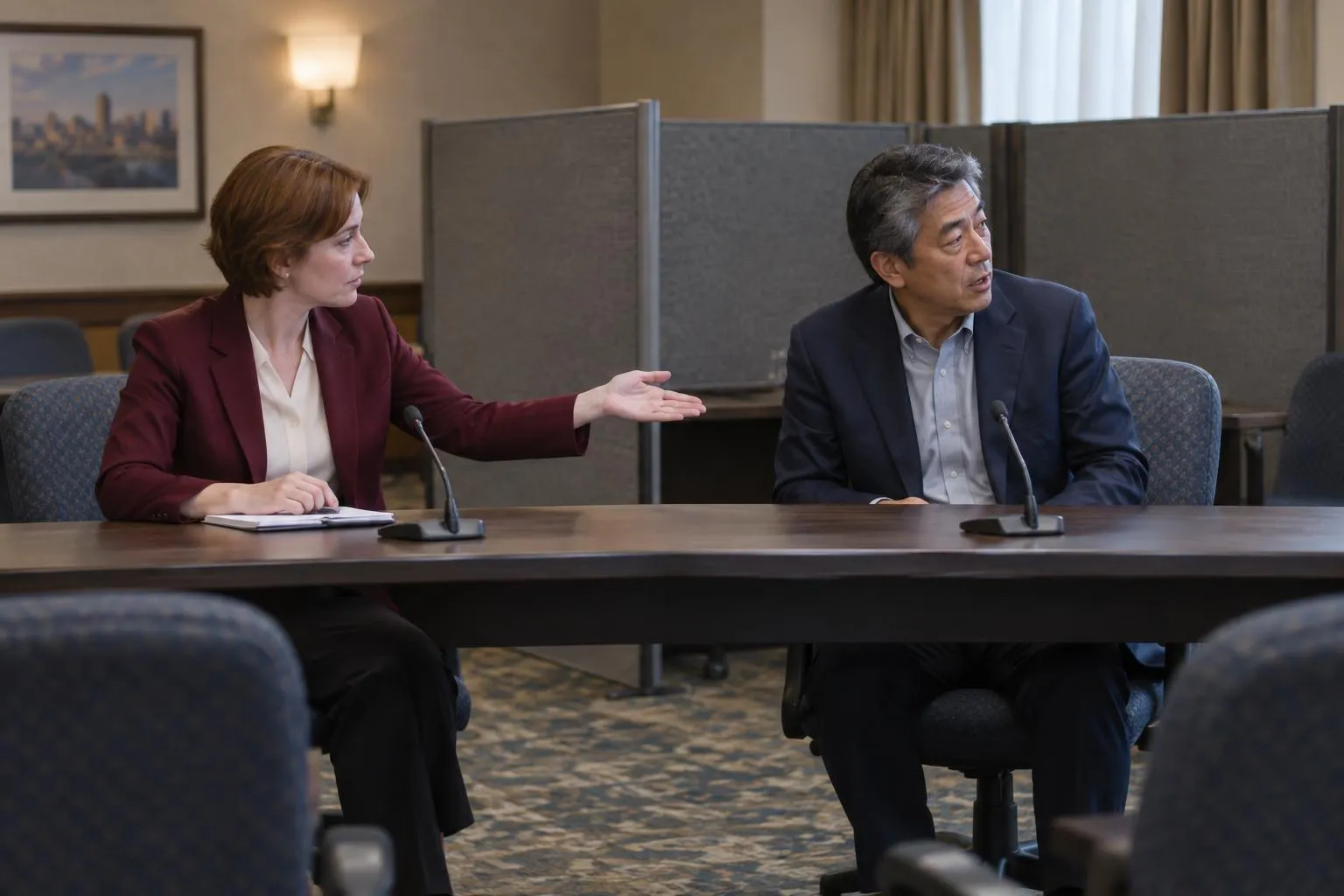
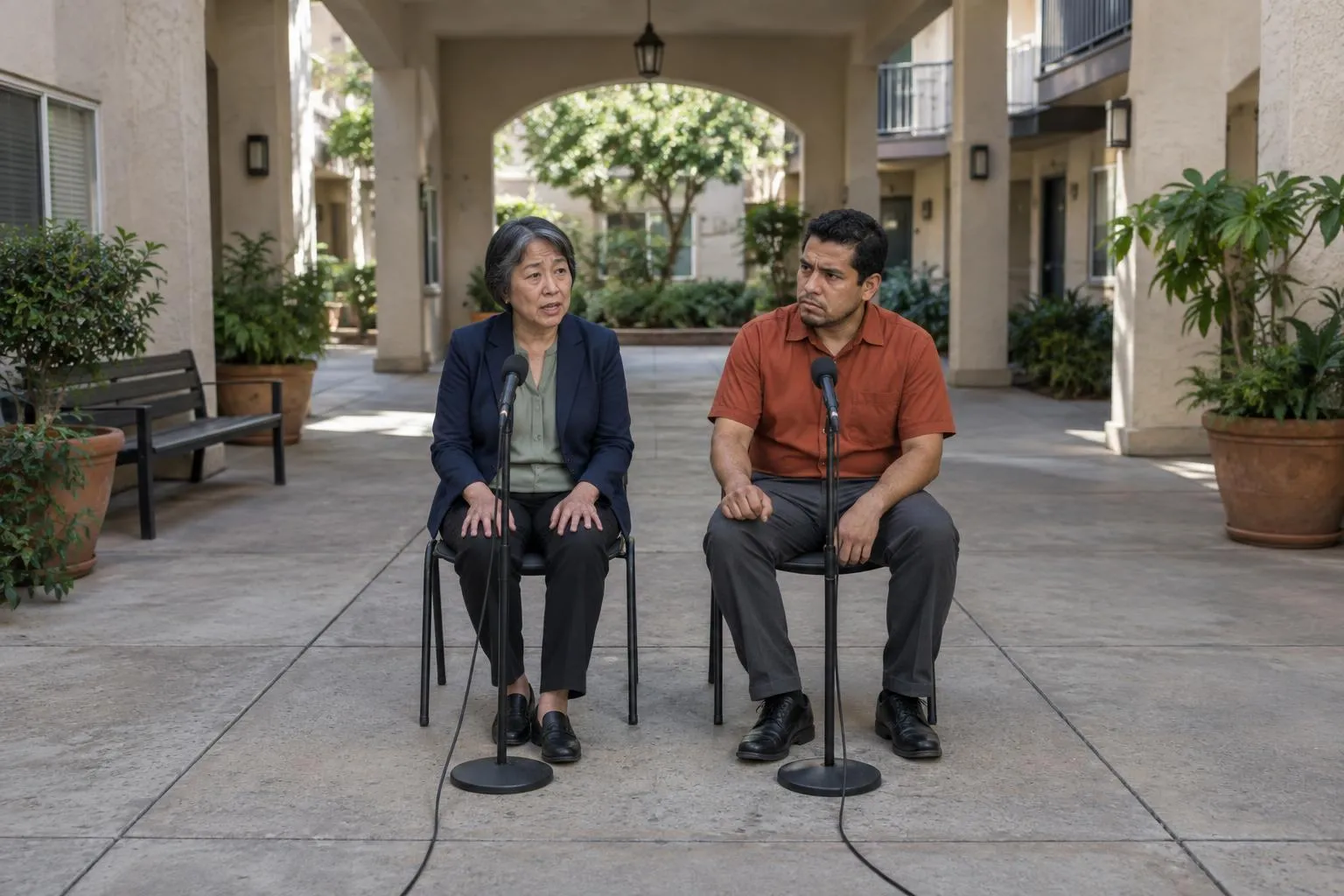
My first time watching a certified court interpreter work in real time, I assumed it was basically just translation — someone repeating what was said in a different language. Then the proceedings went sideways. A witness started speaking rapidly, emotionally, in fragmented sentences. The interpreter kept pace word for word, maintaining the same cadence, the same register, the same hesitation in her voice. When it was over, the attorney leaned over and said: “She’s the reason that testimony is admissible.”
That moment reframed everything I thought I knew about this profession.
The Short Version:Certified court interpreters are officers of the court — not bilingual helpers. Hiring an uncertified interpreter in a legal proceeding can render testimony inadmissible and expose parties to appeal. Federal certification (FCICE) is the gold standard; state programs like Illinois’s statewide registry are the floor. If you’re hiring one, certification status and language pair are the only things that matter at the start.
Key Takeaways:
- Court interpreters work across three distinct modes — consecutive, simultaneous, and sight translation — and mastery of all three is required for federal certification
- Over 96% of federal court interpreter usage is Spanish; demand across other languages is rising with U.S. demographic shifts
- Free interpretation services exist in most jurisdictions (including Cook County, IL) — most people don’t know to ask
- Certification is jurisdiction-specific: federal certification is nationally recognized, but state programs vary and aren’t always reciprocal
What a Certified Court Interpreter Actually Does
Here’s what most people miss: the title “interpreter” and the title “certified court interpreter” are not interchangeable.
A certified court interpreter is a credentialed officer of the court. They operate under oath. Their job isn’t to help a party communicate — it’s to serve the integrity of the judicial process. That distinction matters enormously.
They work in every corner of the legal system: criminal arraignments, civil trials, depositions, probation interviews, immigration hearings, family court proceedings, attorney-client consultations. Anywhere the court record needs to capture testimony from a Limited English Proficiency (LEP) individual, a certified interpreter is either legally required or strongly advised.
The work breaks into three technical modes:
- Simultaneous interpretation — real-time, no pauses; used during active proceedings like trials and hearings
- Consecutive interpretation — speaker pauses, interpreter renders; used in witness examination and attorney consultations
- Sight translation — converting a written document to spoken language on the spot
Federal certification requires demonstrated competency in all three. Most state exams do too.
Reality Check:Hiring a bilingual paralegal, a family member, or even a professional translator to interpret in a legal proceeding is not a workaround — it’s a liability. Interpreted testimony can be challenged on appeal if the interpreter wasn’t qualified. Judges have excluded entire depositions for this reason.
The Certification Landscape (And Why It’s Confusing)
The U.S. doesn’t have a single national standard for court interpreter certification. What it has is a federal standard and a patchwork of state programs — and understanding the difference matters depending on the jurisdiction you’re working in.
Federal Certification (FCICE)
Administered by the Administrative Office of the U.S. Courts, the Federal Court Interpreter Certification Exam is the most rigorous credential in the field. As of 2026, exams are being administered in a two-phase format: written exam first, then oral.
The oral exam tests all three interpretation modes at a professional level. It’s notoriously difficult — pass rates hover low enough that the AO maintains a “professionally qualified” category for interpreters who’ve passed the written but not yet the oral.
Spanish dominates federal demand: 96% of interpreter usage in federal courts is Spanish, and the AO has certified over 900 Spanish interpreters since the program launched in 1990. Other languages are in the pipeline, but Spanish is where the infrastructure is deepest.
Federal certification is recognized in both federal and state courts nationally — it travels with the interpreter.
State Certification
State programs exist on a spectrum. Some are rigorous and well-resourced; others are essentially registration lists with minimal vetting.
Illinois runs one of the more structured state programs through the Administrative Office of the Illinois Courts (AOIC). The path looks like this:
- Two-day orientation covering role, ethics, modes, and courtroom protocols
- Written exam: 135 multiple-choice questions, 2 hours 15 minutes, covering English proficiency, legal terminology, court procedures, and ethics
- Oral Proficiency Interview (OPI)
- Application for certified, qualified, or registered status on the statewide registry
The registry applies to all circuit courts in Illinois. Cook County’s Office of Interpreter Services pulls from it — and provides interpretation at no cost to LEP individuals in proceedings.
| Certification Type | Jurisdiction | Key Exam Components | Notes |
|---|---|---|---|
| Federal (FCICE) | All U.S. federal courts | Written + oral (consec./simul./sight) | 900+ Spanish certified; nationally recognized |
| Illinois State Certified | IL circuit courts | Orientation, written (135 Qs), OPI | Statewide AOIC registry; free to LEP users |
| NCSC State Oral Exam | Multiple states | State-specific oral exam | NCSC develops/administers; varies by language |
| EOIR Accreditation | Immigration courts | Separate DOJ accreditation process | Required for immigration proceedings |
| Qualified/Registered | Varies by state | Lower bar than “certified” | Used when no certified interpreter available |
Pro Tip:When hiring through an agency, always ask for the interpreter’s specific certification level — not just “certified.” The difference between “certified,” “qualified,” and “registered” is meaningful. In a deposition, you want certified or professionally qualified at minimum.
How to Hire a Certified Court Interpreter
The process is more straightforward than most attorneys and paralegals expect. The failure modes are almost always around verification and lead time.
Step 1: Identify the jurisdiction and language pair. Federal proceedings require federally certified interpreters. State court proceedings require state-certified or NCSC-tested interpreters. Immigration hearings require EOIR-accredited interpreters. These are not the same pool.
Step 2: Verify certification directly. Don’t rely on an agency’s claim. The AO maintains a public list of federally certified interpreters. State registries (like Illinois’s AOIC registry) are also searchable. For a deposition, pull the interpreter’s name before the session.
Step 3: Book with enough lead time. Especially for less common languages, availability can be tight. Illinois’s AOIC recommends contacting the court at least two weeks in advance for scheduling. For freelance or agency bookings, two weeks is a safe floor; for rare language pairs, more.
Step 4: Brief the interpreter. Certified interpreters are neutral — they don’t advocate for either side — but they benefit from case context. Share relevant terminology, any specialized vocabulary, and the expected format of the proceeding. This isn’t coaching; it’s professional preparation.
What Certified Interpreters Cost
I’ll be honest: the public data here is thin. Certified interpreters command higher rates than uncertified, and rates vary significantly by language pair, jurisdiction, and whether you’re booking direct or through an agency.
What is clear:
- Court-provided services are free to LEP individuals in most jurisdictions. Cook County’s Circuit Court provides interpretation at no cost. Federal courts are required to provide certified interpreters in criminal proceedings at no expense to the defendant.
- Attorney-arranged interpreters for depositions typically involve agency fees. Expect minimum half-day rates rather than hourly billing, plus potential travel and equipment charges for simultaneous setups.
- Certified interpreters earn more and get more work. The investment in certification pays off in assignment volume and client quality — agencies route premium work to certified interpreters first.
For defendants and LEP witnesses: always ask the court first. The service may already exist and be free.
Equipment, Technology, and the Courtroom Reality
Simultaneous interpretation requires equipment. The interpreter needs an interpreter console or transmitter; participants need receivers and headsets. For small proceedings this can be a portable setup. For large courtrooms or multi-party depositions, wireless equipment is standard — the NCSC specifically recommends wireless systems for group hearings.
Remote interpretation has complicated this further. Video remote interpreting (VRI) platforms are now common, particularly for less-prevalent languages where a local certified interpreter may not be available. The quality standards are the same; the logistics are different. Individual addressing and clear audio are non-negotiable — the record depends on it.
Nobody tells you this: audio quality in interpreted depositions is often the last thing the booking attorney thinks about and the first thing that causes problems in the record.
The Legal Framework Behind the Work
The Court Interpreters Act and its subsequent amendments established the federal mandate for interpreters in grand jury and pretrial proceedings. The law requires criterion-referenced testing — meaning interpreters are measured against a fixed professional standard, not ranked against each other. The Judicial Conference is authorized to expand the program to additional languages as demand warrants.
States vary in their mandates. Most have equivalent state-level requirements, but enforcement and funding differ. The National Center for State Courts (NCSC) provides testing infrastructure, webinars, and oral exam development support to state programs that lack resources to build their own.
Reality Check:“We had an interpreter” is not a defense if that interpreter wasn’t certified for the proceeding type. Courts have remanded cases specifically because interpretation didn’t meet the certification standard required by statute.
Future Trends Worth Watching
Demand is rising. The U.S. linguistic landscape is diversifying faster than the interpreter pipeline can keep up with. Spanish remains dominant at the federal level, but Mandarin, Vietnamese, Haitian Creole, and Arabic usage in state courts is climbing steadily.
AI interpretation tools are entering the conversation — and will eventually change parts of this market. But the evidentiary standard for interpreted testimony hasn’t changed. Until courts formally adopt AI-assisted interpretation and develop a certification framework around it, certified human interpreters remain the only defensible option for proceedings that go on the record.
The 2026 federal exam cycle is a signal: the AO is investing in expanding the certified pool, not replacing it.
Practical Bottom Line
If you’re an attorney or paralegal booking a court interpreter:
- Confirm the certification level before the proceeding — not after
- Check jurisdiction requirements (federal vs. state vs. immigration)
- Ask the court first — free services often go unclaimed because no one asked
- Give two weeks minimum lead time for common languages, more for rare ones
- Brief the interpreter on specialized terminology before the session
If you’re pursuing certification yourself, the federal track is the most credible path even if you primarily work in state courts. The Illinois AOIC program is a solid model for understanding what rigorous state certification looks like. Start with the written exam — you can’t sit for the oral without passing it first.
For a deeper look at how interpreters work in deposition settings specifically, see our guide to deposition services and the full breakdown of court reporting and legal support credentials. The certification standard that protects the record is only as good as the professional holding it.
Done reading? Get quotes from certified court interpreters near you.
Takes about a minute. Free, no obligation; providers reply to you directly.
Popular cities:
Nick built this directory to help attorneys find credentialed court interpreters without relying on court-appointed lists that are often outdated or unavailable for depositions — a gap he ran into firsthand when sourcing a last-minute interpreter for a deposition with a Spanish-speaking witness.