Get free quotes from court interpretation near you
Takes about a minute. Free, no obligation; providers reply to you directly.
A court administrator once told me she’d rescheduled the same immigration hearing four times — not because the attorney was unavailable, not because the judge’s calendar was full, but because she couldn’t find a certified Spanish-English interpreter in a three-county radius on short notice. Four delays. Four families in limbo. One staffing gap.
That story isn’t rare. It’s the daily reality of a profession most people assume is plentiful and well-documented. The data tells a more complicated story.
The Short Version:The global court interpreting market sits at roughly $2.5 billion and is growing at 7% annually through 2033. But a certified interpreter shortage is simultaneously slowing proceedings nationwide while remote technology scrambles to fill the gap. If you work in legal, you need to understand both sides of this equation.
Key Takeaways
- The global court interpreting services market is projected to nearly double from $2.5B (2025) to $4.2B by 2033
- Over 30 U.S. states now mandate certification — but supply hasn’t kept pace with demand
- 90% of U.S. court interpretation work involves Spanish-English language pairs
- Remote Simultaneous Interpretation (RSI) usage surged 600% in 2020 and hasn’t looked back
Market Size and Growth
The global court interpreting services market was valued at approximately $2 billion in 2023, climbing to an estimated $2.5 billion by 2025, and analysts project it will reach $4.2 billion by 2033 — a compound annual growth rate of 7% over that period.
For context, interpretation is one segment of a much larger language services industry. The global language services market was valued at $52 billion in 2020, with interpretation accounting for roughly 18% of that figure — about $9.36 billion across all interpretation contexts (medical, diplomatic, corporate, legal).
Court-specific interpretation is a subset of that, concentrated heavily in federal and state judicial systems, immigration tribunals, and depositions.
| Metric | Value | Source / Year |
|---|---|---|
| Global court interpreting market (2023) | $2.0B | Market analysts |
| Global court interpreting market (2025) | $2.5B | Market analysts |
| Projected market size (2033) | $4.2B | Market analysts |
| Market CAGR (2025–2033) | 7% | Market analysts |
| On-site interpreting CAGR (through 2026) | 5.3% | Industry research |
| Global language services market (2020) | $52B | Industry research |
| Interpretation share of language services | ~18% | Industry research |
Workforce Statistics
The U.S. Bureau of Labor Statistics counted 75,300 interpreter and translator jobs in 2024, with 6,900 annual openings — most of which come from replacements and retirements, not net new growth. The BLS projects overall employment growth for this category at just 2% from 2024 to 2034, well below the average for all occupations.
Here’s what most people miss: an earlier BLS projection from the 2021–2031 cycle showed 20% growth for interpreters. The revised 2% figure represents a significant recalibration, suggesting the profession’s expansion is maturing even as demand for specific language pairs and specializations remains acute.
Zippia’s data, which tracks certification specifically, still projects 20% demand growth for certified court interpreters from 2018 to 2028 — a distinction worth noting. The overall interpreter market may be moderating, but certified specialists are a different animal.
Reality Check:The 2% BLS growth projection and the 20% Zippia certified-demand projection aren’t contradicting each other. They’re measuring different things. General interpreter employment is flattening. Certified court interpreter demand — the specialty credential, the legal domain, the high-stakes courtroom work — is still climbing.
Compensation
The BLS recorded a median annual wage of $59,440 ($28.58/hour) for interpreters and translators as of May 2024. This figure encompasses the full range of interpretation contexts, from conference rooms to courtrooms.
Certified court interpreters — particularly those with Federal Court Interpreter Certification Examination (FCICE) credentials or state court certification — typically command rates above this median, especially for federal proceedings, multi-day trials, and rare language pairs.
Certification Landscape
More than 30 U.S. states now require court interpreter certification, a number that has grown steadily over the past decade as states reckon with quality control and due process obligations. Title VI of the Civil Rights Act mandates language access in federally funded programs, including courts — and that legal floor has pushed more states toward formal certification frameworks.
The Federal Court Interpreter Certification Examination (FCICE) serves as the national standard for federal court work. The 2026 examination cycle reflects the ongoing institutionalization of credentialing in this space.
Accuracy data makes the case plainly: certified legal interpreters achieve accuracy rates above 98%, compared to ad-hoc or family interpreters who show error rates roughly 50% higher. In a legal context, a miscommunicated phrase isn’t just unprofessional — it’s potentially grounds for appeal.
Language Pair Concentration
The Spanish-English language pair dominates U.S. court interpretation, accounting for roughly 90% of all court interpreter work nationwide. This concentration reflects immigration patterns, population demographics, and the volume of legal proceedings involving Spanish-speaking parties.
The remaining 10% is fragmented across dozens of languages — Mandarin, Vietnamese, Arabic, Somali, Haitian Creole, among others — typically handled by smaller regional firms or specialists. These niche language pairs often see the steepest shortages, since certification infrastructure exists almost exclusively for Spanish-English.
Pro Tip:If you’re an attorney or court administrator in a market with significant non-Spanish-speaking immigrant populations, building a pre-vetted roster of interpreters for your region’s top five non-English languages will save you more scheduling headaches than any other single operational change.
The Shortage Problem
The “Justice Disrupted” report, which examined interpreter availability across U.S. courts, documented how shortages are actively delaying hearings nationwide. That delayed hearing story from the beginning of this piece? It has a structural cause.
Only 12% of certified interpreters hold credentials in more than one specialty area, limiting flexibility. Burnout rates during high-demand periods have been documented at around 40% in adjacent interpreting fields. Regional availability is highly uneven — metro areas with strict state certification mandates and high immigrant populations tend to have deeper certified interpreter pools, while rural jurisdictions often have almost none.
Technology’s Role
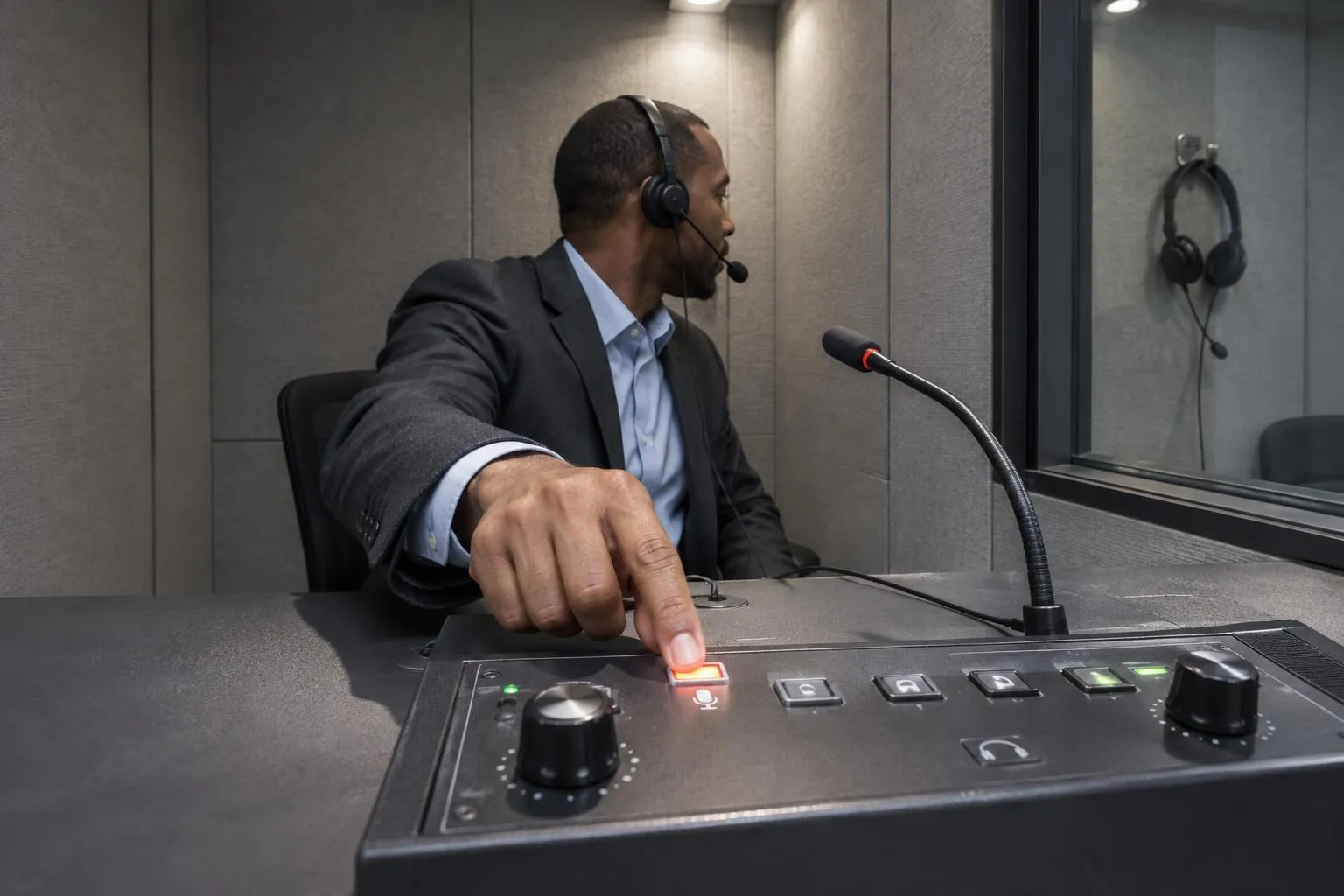
Remote Simultaneous Interpretation usage grew 600% in 2020 during the pandemic, and adoption hasn’t reversed. Video Remote Interpreting (VRI) platforms have cut interpreter wait times by an average of 15 minutes per proceeding in documented implementations.
The calculus for courts is changing: RSI and VRI don’t eliminate the need for certified interpreters, but they dramatically expand geographic reach. A FCICE-certified interpreter in Phoenix can now serve a federal proceeding in rural Montana without either party absorbing travel costs.
AI and machine translation tools are increasingly present at the periphery of legal interpretation, though they remain inadmissible substitutes for certified human interpreters in evidentiary proceedings. The EU alone spends roughly €1.1 billion annually on translation and interpreting services — a figure that reflects both the scale of multilingual legal work and the durability of human expertise requirements.
Practical Bottom Line
The certified court interpreter market is growing, undersupplied in key language pairs and geographies, and actively being reshaped by remote technology. For attorneys, the practical implications:
- Book certified interpreters early, especially for rare language pairs — the Justice Disrupted shortage data is not improving quickly
- Understand your jurisdiction’s certification requirements — more than 30 states have them, and uncertified interpretation can create admissibility problems
- Consider RSI/VRI platforms for proceedings where travel logistics create bottlenecks; most platforms now connect to FCICE-certified professionals
- Use accuracy as your quality filter, not price — the 98% vs. higher error rate gap between certified and ad-hoc interpreters is a legal risk differential, not just a professionalism distinction
For a deeper look at credentials, how certification exams work, and what separates federal from state credentialing, see the Complete Guide to Certified Court Interpreters.
Done reading? Get quotes from certified court interpreters near you.
Takes about a minute. Free, no obligation; providers reply to you directly.
Popular cities:
Nick built this directory to help attorneys find credentialed court interpreters without relying on court-appointed lists that are often outdated or unavailable for depositions — a gap he ran into firsthand when sourcing a last-minute interpreter for a deposition with a Spanish-speaking witness.